One common issue in Georgia DUI cases is the language barrier between the officer's instructions and questioning and the suspect's native language. In State v. Ortiz, the Georgia Court of Appeals analyzed whether or not a suspect understood the officer's instructions and questions for the purpose of determining whether or not he had voluntarily submitted to the field sobriety tests and the state-administered breath test.
The court concluded that Ortiz lacked the capacity to give actual consent for the tests based on a language barrier. In September 2019, a Gwinnett County Police Officer, who had been trained in DUI detection and field sobriety evaluations, stopped to help other officers with a traffic stop. He was told that the driver of the vehicle, who was identified as Ortiz, had failed to maintain his lane multiple times. The officer was further told that Ortiz was "kind of hard to understand." The officer testified that Ortiz had a Spanish accent and his speech was slow and slurred. The video-recording of the incident showed that the officer had turned to another officer and said, "I don't understand what he's saying." The officer also admitted on cross-examination that he did not ask Ortiz if he understood English or wanted an interpreter. Asking for Field sobriety tests: The officer questioned Ortiz about performing field sobriety tests at least five times, and each time was met with a non-responsive answer; once Ortiz responded that he lived nearby, and another time he responded that he was nervous. It was not until another officer approached the car, gestured for Ortiz to exit the car, and asked Ortiz two more times about performing the tests that Ortiz apparently indicated — by slightly moving his head from side to side and up and down in a gesture that arguably could be interpreted as a "yes" — that he would perform the tests. Oddly, the officer testified at the hearing that he believed Ortiz's failure to understand some of the questioning was attributable to the noise in the gas station parking lot rather than his inability to speak English. After Ortiz shook his head in a manner that could be interpreted as a "yes" the officer performed field sobriety testing and arrested Ortiz for DUI. He then read him the Implied Consent Notice for Suspects 21 and over and asked him to submit to a state breath test. Asking for the State Breath Test: When the officer asked Ortiz whether he would submit to the state breath test, Ortiz did not understand at first, but the officer was "able to get him to understand," and Ortiz eventually consented when he "shook" his head "yes." He asked him 3 times (in English) if he would take the breath test: 1) the first time, he did not respond 2) the second time, he told the officer twice "I don't understand" 3) the third time, he replied "I take it" The Georgia Constitution Gives Suspects More Constitutional Protection than the US Constitution: The Georgia Constitution provides that "[n]o person shall be compelled to give testimony tending in any manner to be self-incriminating." Ga. Const. of 1983, Art. I, Sec. I, Par. XVI. Valid consent can demonstrate that an individual was not compelled to give incriminating testimony when submitting to a state-administered breath test, see Olevik, 302 Ga. at 243 (2) (c) (iii), 806 S.E.2d 505, the State must show that the DUI suspect "gave actual consent to the [state-administered test], which would require the determination of the voluntariness of the consent under the totality of the circumstances." Williams v. State, 296 Ga. 817, 821, 823, 771 S.E.2d 373 (2015). Outcome: The State had the burden of demonstrating that Ortiz sufficiently understood what was being said to him to provide actual, voluntary consent to take the state breath test and have that evidence be admissible against him at trial. The Georgia Court of Appeals agreed with the trial court's ruling that under the "totality of the evidence" test that the trial court's findings and the record was correct in determining that Ortiz did not give actual, voluntary consent to perform the field sobriety evaluations due to the language barrier. Therefore, any performance on field sobriety tests and the state breath test would be excluded from a DUI trial in his case.
0 Comments
 Problems with the "Eye Test" in DUI arrests:
The "Eye Test" that is given by police officers during DUI investigations is called the Horizontal-Gaze Nystagmus Test. In this test officers are looking for three clues which include:
What is Nystagmus? Nystagmus is an involuntary rapid jerking of the eye. Nystagmus can be caused by many different things. One thing that can cause Nystagmus is alcohol use. The problem is that nystagmus can be caused by so many conditions that it is hard for the officer on the side of the road to determine what is causing any nystagmus that the officer may see. To read further about nystagmus and its causes, see this page from the American Academy of Ophthalmology. www.aao.org/eye-health/diseases/what-is-nystagmus What the officer is looking for in each step:
One of the most problematic issues with the HGN Test is that nystagmus can be caused by many types of medical or neurological issues that a person may or may not know that they have. Here is a quick list of causes of nystagmus:
In Summary: It is always important to have an experienced DUI lawyer, review the evidence in your case, any prior medical or injury history, and THEN make a determination as to whether any alleged nystagmus observed by an officer was related to alcohol or drug use OR some other cause.
Field sobriety tests (FST) include the HGN (eye test), the Walk and Turn Test, and the One-Leg Stand Test. Another common FST is the portable breath test. Many officers will tell the person being investigated for DUI that the portable breath test is "just to tell me a positive or negative for alcohol." This is complete misstatement of what is actually happening. Most, if not every single portable breath test, give a numerical blood alcohol amount which the officer views to see what your result is. This amount shown on the portable breath test is not admissible against you as a blood alcohol level at trial but the officer is going to look immediately at what the portable breath test result is. These portable breath tests or PBT's can be inaccurate and are not approved by the GBI Division of Forensic Sciences. That is why this result is not admissible against you at trial.
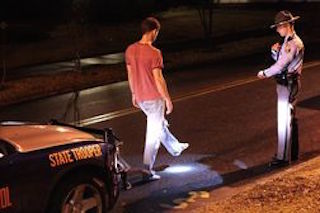
In the Ammons case, the Defendant refused to perform the common field sobriety tests that an officer requested her to perform after being stopped and investigated for a DUI. In this case the prosecutors were trying to introduce evidence to the jury that the Defendant refused these roadside tests. In actuality, there are many reasons why people refuse these roadside tests (other than-what the prosecutors are trying to show-in that-they would have taken the tests but they thought they would fail them). The tests have a lot of directions that most people have never heard before. They may be older or have injuries that may prevent them from performing physical dexterity tests. They have never performed these tests before. And, now in performing the One-Leg Stand Test, they are being asked to stand on one foot with their hands down by their sides, with a police officer shining a flashlight at them, and count to 30-1 thousand (30 seconds) all while standing on one foot. The "clues" on this test are: putting your foot down, swaying, hopping, or raising your arms. I would argue that most people would exhibit clues on the field sobriety tests if I was administering these tests in the comfort of an office when they were not being investigated for a crime. The Georgia Supreme court held in the Ammons case that Article I, Section I, Paragraph XVI of the Georgia Constitution ("Paragraph XVI") provides that "[n]o person shall be compelled to give testimony tending in any manner to be self-incriminating." This protection against self-incrimination applies to preliminary breath tests using an alco-sensor and field sobriety tests that require the cooperation of the suspect. WHAT THIS MEAN is that: The Defendant (or a person being investigated for a DUI) has the right to refuse to perform the preliminary breath test and the field sobriety tests under the Georgia Constitution, and most importantly that the evidence of his/her refusals cannot be introduced as evidence of guilt against him/her at trial. This is an important protection that Georgia citizens are given under our Georgia Constitution. Proud to be a member of the DUI DLA and have a great network of excellent DUI lawyers from around the country and Canada to discuss legal issues and challenges that come up in DUI cases,
https://duidla.org/member/billhardmanlawyer-com/

Memorial Day Weekend Includes Enforcement of Boating Laws & Social Distancing for Game WardensFor Immediate Release: May 21, 2020 SOCIAL CIRCLE - As Memorial Day quickly approaches, Georgia Game Wardens across the state are gearing up for a very busy weekend on the lakes, rivers, beaches, and on State Parks. They will be patrolling all state waterways, making sure the thousands of recreation seekers are lawfully enjoying themselves. This year, however, they have an added responsibility – making sure everyone is complying with the social distancing executive order. “The Division will have a strong presence on our state impoundments, rivers and beaches across Georgia, addressing boating violations and emphasizing Boating Under the Influence (BUI) enforcement in order to keep our waters safe,” said DNR Law Enforcement Division Director Colonel Thomas Barnard. “They will also be addressing any violations regarding the Governors Executive Order.” The Executive Order, which is in effect through May 31st, requires a 6-foot distance between individuals from different households, and therefore applies to people visiting beaches, lakes, parks and other public locations as well. “With social distancing, our goal is compliance. We are not focused on writing tickets or making arrests related to social distancing. From what we have seen so far, when we ask people to comply, they do, and that is what we are looking for,” said Barnard. When it comes to violations of boating laws, enforcement will be tight, especially for those who choose to operate a vessel while impaired. The Division has a zero-tolerance policy for BUI and violators will go to jail. In Georgia there were 113 boating incidents with 26 fatalities in 2019, and Game Wardens made 209 boating under the influence arrests. So far in 2020, there have been 40 boating incidents, resulting in seven fatalities, and 25 people have been arrested for BUI. Additionally, there were 44 drownings statewide last year and 14 so far this year. Boating Safety Tips • Designate an operator. Do not drink and operate a boat. Georgia law states anyone operating a vessel with a blood alcohol content level of .08 or higher is boating under the influence. • Take a boating safety course. Recommended for everyone, but anyone born on or after January 1, 1998 is required to have successfully completed a DNR-approved boater safety course before operating a motorized vessel on Georgia waters. Visit https://gadnrle.org/boating-education for course information. • Wear a life jacket. Children under 13 years of age are required by law to wear a life jacket while onboard a moving vessel, but it’s highly recommended for EVERYONE to wear a life jacket. • Don’t overload your boat with people or equipment. Check the capacity plate for the maximum weight or the maximum number of people the boat can safely carry. • Use navigation lights at ALL times between official sunset and official sunrise. Check lights before it gets dark. • Watch your speed. The 100-foot law applies to ALL size vessels and prohibits operation at speeds greater than idle speed within 100 feet of a moored or anchored boat or any boat that is adrift, a dock, pier or bridge, persons in the water, any shoreline at a residence, public park, beach or swimming area, a marina, restaurant or any other public use area, or any vessel, unless overtaking or meeting another vessel in compliance with the rules of the road. ### The Georgia Department of Natural Resources Law Enforcement Division is committed to conserving our natural resources and protecting the people we serve through fair and vigorous law enforcement, quality education, and community involvement. TRUST, FAIRNESS, PROFESSIONALISM. Contact: Mark McKinnon, Public Affairs Officer Office: (770) 918-6408 [email protected]
 Texting while driving is a common way to get pulled over in Georgia. Below is a short summary of the law and what is allowed and what is not allowed in Georgia and the penalties for violations of the law: What is allowed: 1) Earpieces and headphones; 2) Apple Watches; 3) Siri- you can press one button to activate your siri assistant on your device; 4) You can use your GPS but cannot type in an address while you are moving. **You are allowed to make emergency calls for emergency situations without using a hands-free device. It is relatively unlikely however that you will be pulled over for a situation where you are making an emergency call. What is NOT allowed: 1) Taking off your seatbelt to reach for your phone; 2) holding or supporting your phone with any part of your body (it cannot be sitting in your lap) 3) Any type of messaging (text, Facebook, email or other type of message) 4) Recording any type of video while you drive ( if there were to be a legal search of your information, you should not have a live video or picture posted to your social media account while driving or that evidence may be used against you) PENALTIES: All violations of this section of Title 40 of the traffic code are misdemeanors. 1st Violation- Up to a $50 fine and 1 Point on your license **If it is your first offense and you are able to show a receipt that you have purchased a hands-free device, your fine will be waived and there will be no points assessed on your driver's license. 2nd Violation- Up to a $100 fine and 2 Points on your license 3rd Violation- Up to a $150 fine along with 3 Points on your license Note: Many DUI cases and other types of criminal investigations begin with a stop for someone using their phone while driving. You may also be held liable for personal injuries or property damage if it is proven that you were using a mobile device while driving. It is important to make sure that you have a hands-free device to avoid any negative consequences to you, your license or another person due to using a mobile device while driving. 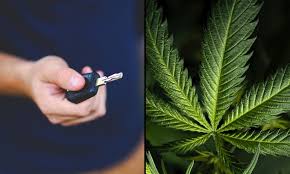 Getting arrested for DUI Marijuana is very different from an alcohol related DUI arrest. Below is a brief summary of some factors and license suspensions that are involved in a Georgia DUI marijuana case: Georgia code section for DUI marijuana O.C.G.A. 40-6-391 (A)(6) and subsection (b) read: A person shall not drive or be in actual physical control of any moving vehicle while ...there is any amount of marijuana or a controlled substance, as defined in Code Section 16-13-21, present in the person's blood or urine, or both, including the metabolites and derivatives of each or both without regard to whether or not any alcohol is present in the person's breath or blood. The above is clarified in subsection (b) in part: such person shall not be in violation of this Code section unless such person is rendered incapable of driving safely. Being "incapable of driving safely" is a key part of marijuana DUI cases. The State prosecutors must show that a person is unsafe to drive because they have used or consumed marijuana. Although it is likely that if someone uses a large amount of marijuana before driving that their driving skills may be affected, this is many times not the case after DUI arrest. Marijuana may have a strong odor after it is burned that may last for hours in a car or on a person's clothing or body. This evidence is frequently evidence of use and NOT EVIDENCE OF IMPAIRMENT.
 As of July 1, 2019, Georgia will have a new implied consent notice regarding the test officers ask for after a DUI arrest. .
When officers arrest someone for DUI, they typically proceed to administer roadside field sobriety tests (HGN test, Walk and Turn, One Leg Stand, Portable Breath Test) and if an arrest is made, request a state-administered test to determine a blood alcohol level or the presence of other drugs. Because of the Georgia Supreme Court's holding in Elliott v. State, 824S.E.2d 265 (2019), decided on February 18, 2019, a person's refusal to submit to a breath test cannot be offered into evidence against them at trial. It is important to note that this is not the "portable breath test" that is usually given as part of the field sobriety tests on the side of the road. The portable breath test or "breathalyzer" is only admissible in court to the extent that the officer obtains a positive or negative reading. The portable breath test does indicate a numerical result, but that blood alcohol number/result is not admissible in court. Refusal to take tests offered at trial Formally, the Intoxilyzer 9000 (breath testing instrument that is usually administered at the jail or police station) was utilized to get an admissible state breath test after an arrest was made. If the results are .08 grams or more, that is per se DUI in the State of Georgia. Because of the holding in the Elliott case and other cases, the Supreme Court has decided that Georgians do have a Constitutional right to refuse a breath test and that refusal cannot be offered into evidence at their DUI trial. People refuse chemical tests in DUI cases for a variety of reasons-i.e. scared to have a needle stuck in their arm inside of the jail, don't understand what implied consent means (because they are not lawyers and are hearing this warning for the first time ever), etc. The problem is that a jury may infer that the reason someone refused a test is "because they were drunk." End Result Now, because of the rulings in recent cases, police officers in Georgia are no longer requesting breath tests after they make DUI arrests. The officers either request a blood or urine test. If you refuse either of those tests, your refusal to submit may be offered into evidence against you at trial. |
AuthorBlog posts by Bill Hardman at Georgia DUI and Criminal Law Archives
April 2024
Categories |
- Home
- Do I need a 30-Day Letter in my DUI Case?
-
Location of your case
- Enter the location of your case
- Athens DUI Lawyer
- Atlanta DUI Lawyer
- Banks County DUI Lawyer
- Baldwin, GA DUI Lawyer
- Barrow County DUI Lawyer
- Blue Ridge DUI Lawyer
- Buford DUI Lawyer
- Clayton County DUI Lawyer
- Clayton Georgia DUI Lawyer
- Cobb County DUI Lawyer
- Cumming DUI Lawyer
- Dahlonega DUI Lawyer
- Dekalb County DUI Lawyer
- Flowery Branch DUI Lawyer
- Fulton County DUI Lawyer
- Duluth DUI Lawyer
- Fannin County DUI Lawyer
- Gainesville DUI Lawyer
- Gwinnett County DUI Lawyer
- Hall County DUI Lawyer
- Lawrenceville DUI Lawyer
- Lumpkin County DUI Lawyer
- Newnan DUI Lawyer
- Oakwood DUI Lawyer
- Smyrna DUI Lawyer
- Rabun County DUI Lawyer
- Roswell DUI Lawyer
- Statham DUI Lawyer
- Suwannee DUI Lawyer
- White County DUI Lawyer
- Winder DUI Lawyer
- Georgia DUI and Criminal Law Updates
- Contact
- DUI Cases In Georgia
- Ask Us About Your Case
- Traffic tickets
- Is my Georgia Driver's License suspended now?
- Drug Possession in Georgia
- Car Wreck/Personal Injury
- City or County of DUI arrest
- About
- Hall County BUI Lawyer
- Important Georgia DUI Laws



 RSS Feed
|
|
|
William S. Hardman, Jr., P.C.
417 Green Street
P. O. Box 438
Gainesville, GA 30503
Phone 770-530-1164
Email: [email protected]
No information contained on this website is to be construed as legal advice in your case. Please consult with a licensed Georgia attorney before making any legal decisions in your case.
417 Green Street
P. O. Box 438
Gainesville, GA 30503
Phone 770-530-1164
Email: [email protected]
No information contained on this website is to be construed as legal advice in your case. Please consult with a licensed Georgia attorney before making any legal decisions in your case.

©2022 William S Hardman Jr. Attorney at Law | All Rights Reserved